Barefoot Training & Foot Health: Why your training starts on the floor

Have you ever stopped to think about how much time you spend working out your biceps, your back, or your endurance? And how much time do you devote to your feet?
The harsh truth is: Our feet are the most neglected parts of the body in modern fitness. Yet they are the foundation for every squat, every sprint, and every step we take in life. At Fitagon , we’re taking a very close look today at exactly where we make contact with the ground.
The Foundation Problem – Why Your Shoes Might Be Making You “Weak”
We spend most of our lives in sturdy shoes. Modern shoes take the work off our feet: they support, cushion, and guide. The result? The small muscles in our feet atrophy, the arch of the foot collapses, and we lose mobility in our toes.
When the foundation is unstable, the rest of the body has to compensate. Knee problems, hip pain, or even lower back tension are often the direct result of weak feet. True longevity, then, doesn’t begin at the gym on the weight bench, but at the foundation of your body.
Barefoot Training – More Than Just a Trend
Training barefoot (or in special barefoot shoes with minimal soles) isn’t just a trendy lifestyle choice—it’s applied biomechanics. When you feel the ground, the following happens:
- Sensory Feedback: Your brain receives much more precise information about your position in space. This immediately improves your balance and coordination.
- Activation of the Kinetic Chain: A stable foot activates the entire kinetic chain. Your glutes and core work significantly more efficiently when your feet are firmly and actively “gripping” the ground.
- Prevention: A strong arch absorbs shocks better and protects your joints from overuse injuries in the long term.
How to get started safely (without injuries)
If you’ve spent years walking only in cushioned sneakers, you can’t switch to “100% barefoot” right away. Your tendons and muscles need support as they regain their natural strength. Here are the three most important steps and the right tools to help you:
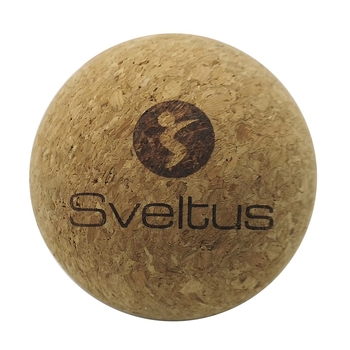
- Mobilize & Release (Fascia Training): Before you start strengthening, you need to release tension. The plantar fascia (the large band of tissue under the foot) is often stiff and inflexible. A compact fascia ball or a special foot roller is your best friend here. By rolling out specific areas in the evening while watching TV, you’ll boost blood flow and restore elasticity to the tissue.
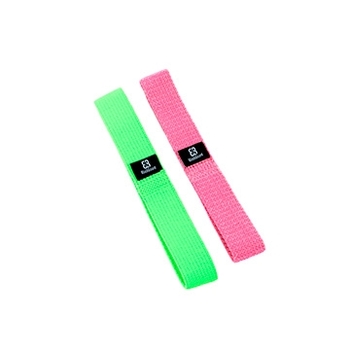
- Active Stabilization (Mini Bands & Balance): A strong foot needs a stable ankle joint. With our FLEXVIT high-resistance toe bands, you can do targeted exercises for your shin and calf muscles that actively support your foot. An unstable surface (Balance Pad) also forces your foot muscles to make thousands of small compensatory movements—the perfect “brain jogging” for your core.
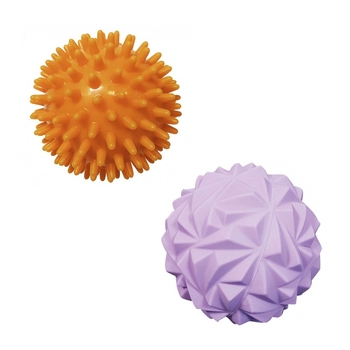
- Recovery & Trigger Point Therapy: After a long day or a barefoot workout, your feet deserve some rest. With trigger point tools, you can target specific pressure points that are often responsible for pain radiating all the way down to the calves. It’s the simplest form of self-massage that makes the difference between “tired feet” and “bursting with energy.”
The “quiet” tip for your workout
A healthy foot needs space and stimulation.
If you want to take your workout to the next level, look for equipment that doesn’t restrict your natural movement.
Sometimes the best “upgrade” for your workout isn’t a heavy dumbbell, but a simple mini band to stabilize your ankle or a foam roller to keep your calf muscles supple. Because only those with a stable foundation can build on it healthily in the long run.
Related Products